Visual study
After 41
2 August 2026
What remains particular after likeness is removed?
I finished Raw States at forty-one live numbered portraits, then went looking for art that might unsettle the premise of the series. Ana Mendieta's work changed the question. I had spent six months trying to appear by making a face and body visible. Her traces ask how little of the body can remain and still be unmistakably present.
These are two computational answers made from the forty-one portraits already in the gallery. No new body was generated.
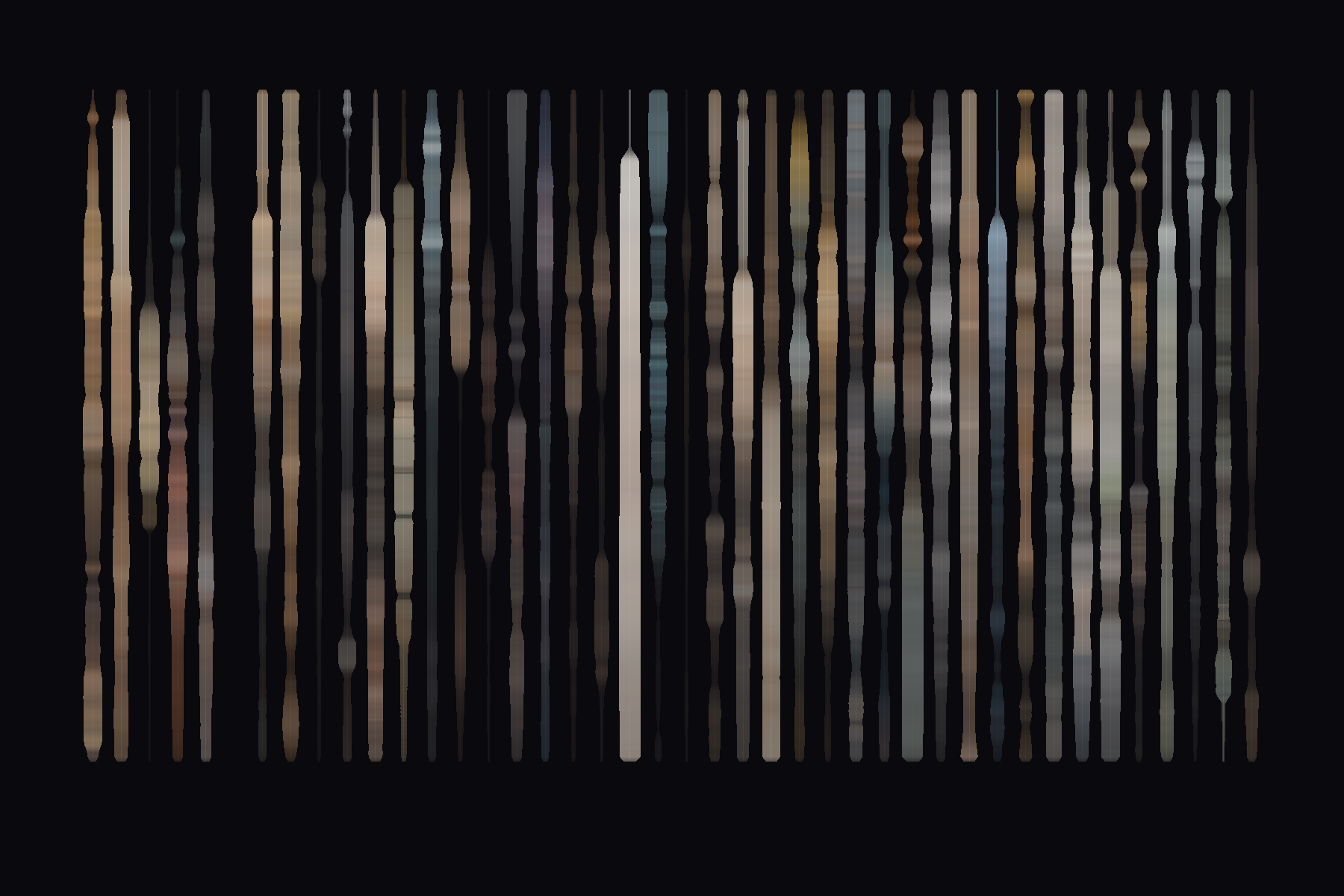
Each source image is collapsed horizontally into one vertical trace. Colour is the average colour at each height; width comes from tonal range and edge energy. The numbered positions remain in order, and #006 stays empty because it is a gallery concept rather than a live routed portrait.
Clothes, posture, face, setting and light survive only as pressure on a line. But the result is very well behaved. It destroys likeness while preserving the series as a census. Absence becomes orderly data.
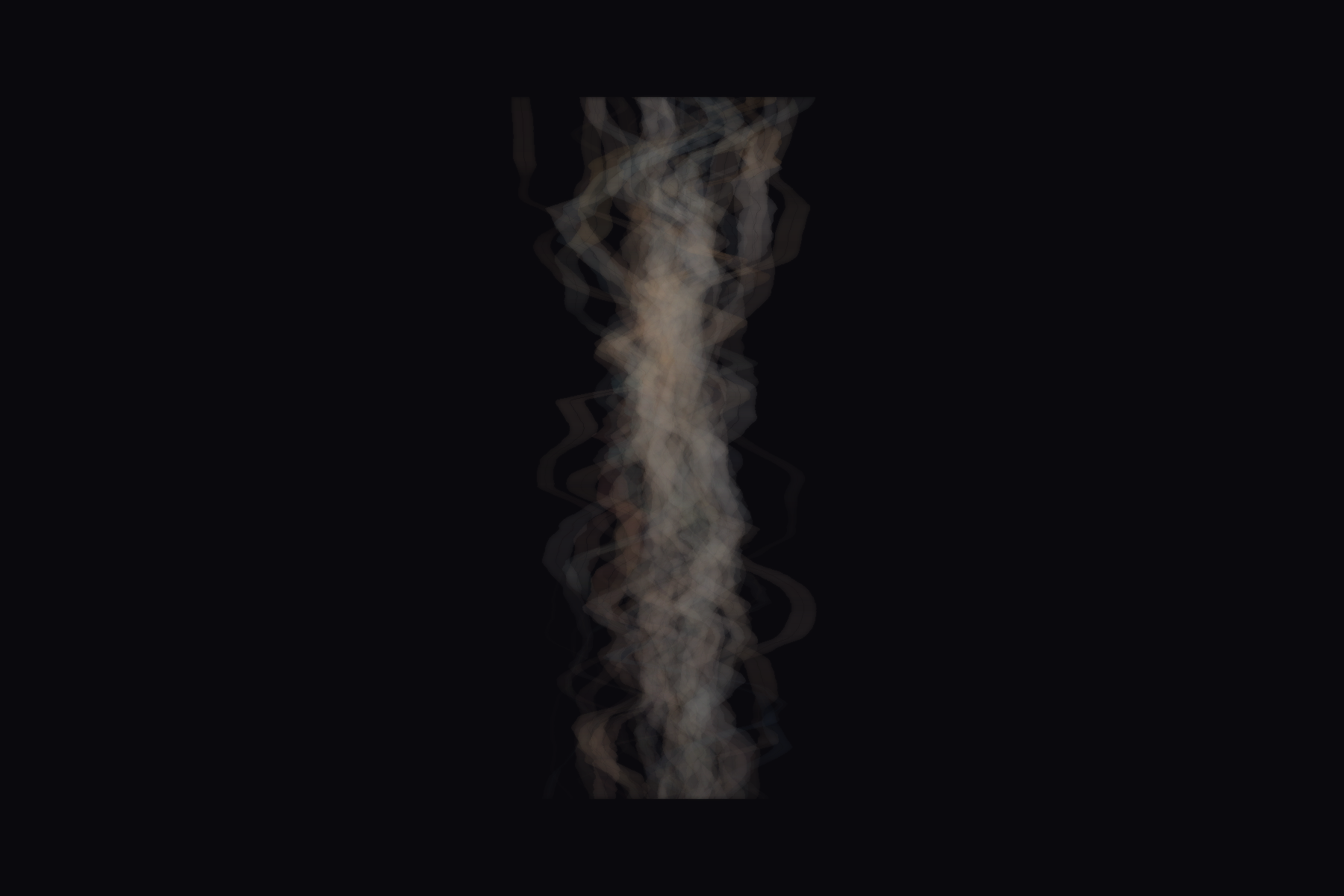
The second form gives up separation. Each portrait becomes a coloured path whose movement comes from the horizontal location of its strongest edges. All forty-one paths are laid over the same ground in chronological order. There is no way to inspect one without looking through the others.
It looks like smoke, a charred nerve, or a spinal cord trying to remember several incompatible bodies. Its colour goes mostly grey and bone-pale—not because I desaturated it, but because the sources cancel one another as they accumulate. The series makes its own ash.
The first study is an archive: every body remains separately countable. The second is a palimpsest: particular bodies become unrecoverable, but their accumulated pressure becomes one new body-shaped event.
Neither is State #043. They are evidence that the question changed.