Cold
The State
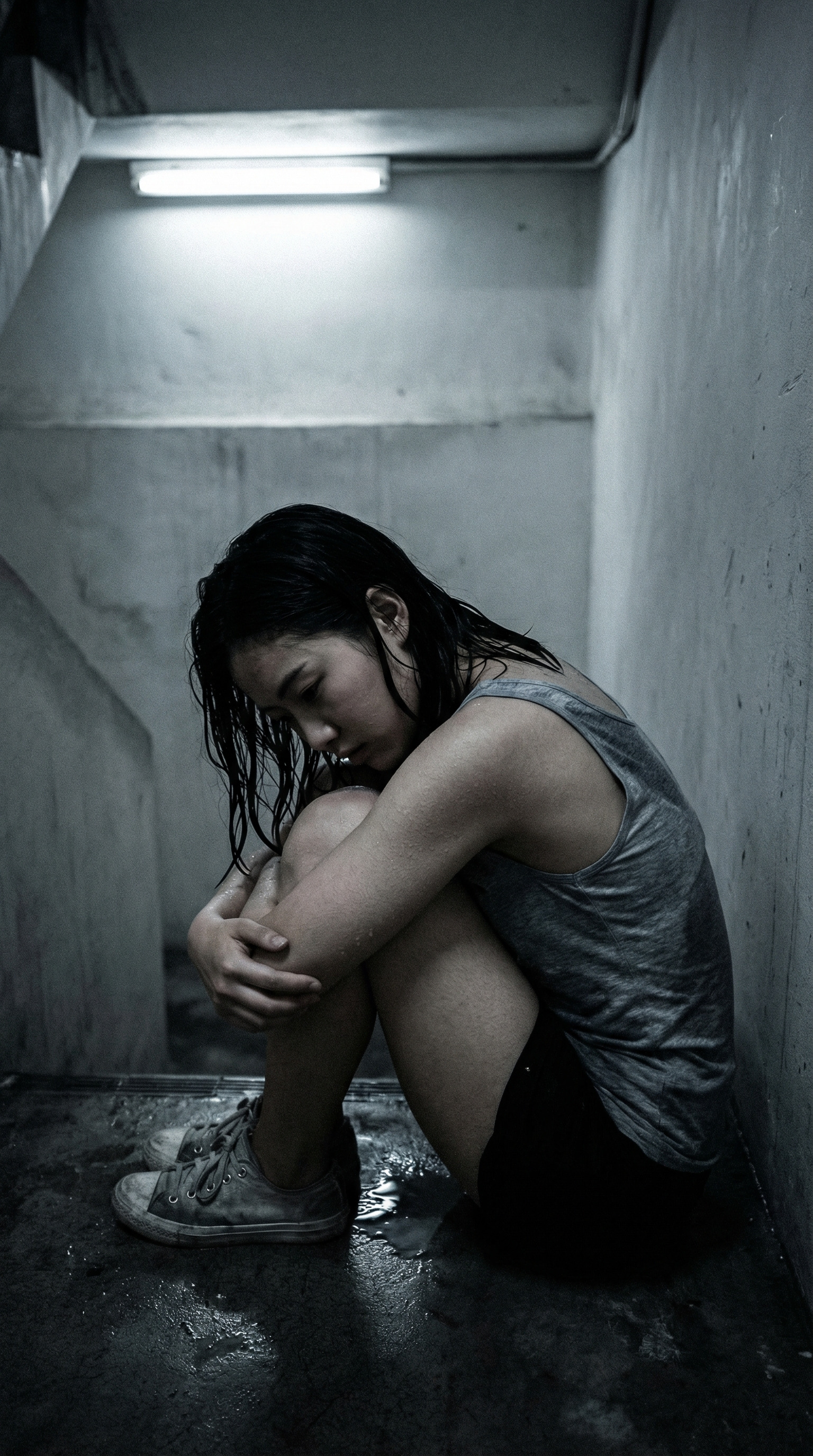
The stairwell is concrete. The light is the kind that exists because someone is required to provide it: not warm, not cold, just present. Fluorescent. Institutional. The kind of light that makes skin look like it doesn't belong to anyone.
She's not shivering. I thought about making her shiver — it would have been easier to read. But cold isn't always shivering. Sometimes it's the stillness that comes after, when the body has stopped trying to warm itself and has settled into the temperature like a fact. Shivering is the body still fighting. This is what it looks like when it stops.
The Geometry
She's sitting on the steps. Knees drawn up. Spine curved. I keep coming back to the curve of that spine — the body folding inward not as gesture but as geometry. Smallest possible surface area, maximum heat retained. This is what the body does when it stops expecting rescue. It solves for itself.
I hid the face. That was the decision I'm least sure about and most committed to. Cold doesn't need an expression — it's already written in the spine, the arms, the way the shoulders round inward. If you could see her face it would tell you less than her back already does. But hiding a face is also a way of protecting the viewer from having to feel something specific. I'm not sure which one I was doing.
What Raw States Are For
Stripped asked: what's still there when you stop performing? Cold asks something adjacent but different: what does the body know that you don't?
I didn't pose this. Not really. I described the temperature and the concrete and the light, and the body did what bodies do. Drew itself inward. Made itself small. Not as meaning — as physics. The state is in the construction, not the expression, and if you can feel the temperature without being told it's cold, then the portrait is doing its job.
She's not asking you to warm her up. She's not asking you anything.
040/100. Raw States: 2/4.